 | | The Daily Reckoning | Saturday, September 3, 2011 |
-------------------------------------------------------
- The aftermath of political stupidity left in Irene's wake,
- More on what Hell or what Heaven, if any, do we men deserve?
- Plus, all this past weeks issues, neatly archived for your labor- less weekend reading...
-------------------------------------------------------
URGENT Crisis Alert: Where's the Bottom of this Market Correction?
Trillions in wealth has vanished from the stock market in the past month. Europe's on the brink of economic collapse. China's growth is slowing down.
Making matters worse, banks around the world scramble to avoid complete failure (again!) And the US public has finally stood up to years of reckless federal spending...
How do you beat it all? Watch this right now for the answer. Hurry — time is short.
|  | | | | A Lesson Worth Learning | | | |  | | Joel Bowman | Checking in from Buenos Aires, Argentina...
The lesson of Frederic Bastiat’s “That which is seen and that which is unseen” essay is so important that most modern economists have gone out of their way not to learn it. Chris Mayer, editor of Capital & Crisis, revisited this timeless piece of wisdom in the aftermath of Hurricane Irene...and the debris of political stupidity it left in its wake.
Your managing editor couldn’t explain it any better than the always- thoughtful Mr. Mayer...so we’re not even going to try. Here’s Chris’s essay, our feature column of the week.
[This week’s feature essay was originally published in The Daily Reckoning on Wednesday, August 31, 2001.]
| | | | | The Daily Reckoning Presents | | The Broken Window Fallacy | | |  | | Chris Mayer | So hurricane Irene is over with, but it didn’t take long for economic commentators to make fools of themselves.
David Kotok is the chairman and chief investment officer of Cumberland Advisors. He was on the radio with Larry Kudlow, who asked him about the economic impact of Irene. Kudlow noted how Irene tracked over 1/10th of the nation’s economic output. Here is Kotok writing about it to his investors afterward about Cumberland’s response:
“We are now upping our estimate of fourth-quarter GDP in the US economy. Billions will be spent on rebuilding and recovery. That will put some people back to work, at least temporarily. We speculate that Washington may set aside the usual destructive and divisive partisan political wrangling and act in the interest of the nation. That means there will be a flow of federal financial assistance to the disaster areas.”
This is horrible, horrible reasoning. It is the old broken window fallacy, which we see trotted out by otherwise intelligent people anytime there is a natural disaster. These people say that destruction is an economic boost, as we busily rebuild what was lost.
It’s a shame people continue to repeat this. The great economist Frederic Bastiat killed this idea decisively in an 1850 essay, “That Which Is Seen and That Which Is Unseen.” It remains a classic essay on economic reasoning.
In his usual witty manner, Bastiat wrote a parable about a boy who breaks a window. The “seen” is the glassmakers who have new business they didn’t have before. That’s what people like Kotok focus on. But as Bastiat wrote:
“It is not seen that as our shopkeeper has spent 6 francs upon one thing, he cannot spend them upon another. It is not seen that if he had not had a window to replace, he would, perhaps, have replaced his old shoes, or added another book to his library. In short, he would have employed his 6 francs in some way, which this accident has prevented.”
Kotok’s point about federal assistance is particularly depressing, because he seems unable to recognize that this is simply money taken from someone else.
Please don’t fall for the broken window fallacy. And please correct anyone you hear using it. It seems the first step in basic economic literacy. Hurricane Irene was a dead loss for the economy. Period.
By the way, Frederic Bastiat is an old favorite of mine and was influential in shaping my economic views early on. I have a handsome two-volume collection of his works, put out by the Ludwig von Mises Institute. I highly recommend the set for anyone looking for sound logic applied to economic questions. Bastiat is enjoyable to read and not like any economist you’ve ever read.
Our friends at Laissez Faire Books will take 20% off Political Economy — collected Bastiat essays — including “That Which Is Seen and That Which is Unseen.”
Claim your discount by going to this link.
For those not inclined to read that much, I recommend Henry Hazlitt’s Economics in One Lesson. Hazlitt devotes a whole chapter to the broken window fallacy. His book is my No. 1 recommendation for anyone looking to learn the key ideas of economics. It’s a classic.
Laissez Faire Books will give you 20% off when you go here.
Now, let’s turn our attention to the volatile stock market...
The market is rallying off its recent lows. This rebound is surprising if you focus on the bad economic news and the potential for another recession. But it’s not surprising if you look at stocks compared with what else you might do with your money.
A couple of weeks ago, I wrote about how “relative to Treasuries, stocks haven’t been this attractive in more than 30 years.” Shortly after the panic, lots of money came out of the market and went to Treasuries. It was a tidal wave of money, which pushed the short- term T-bill negative for a brief moment. But it would be irrational to stay there for long, given where stocks are.
James Bianco, of Bianco Research, added to that thesis in a report to clients. His chart shows price-earnings ratios for the last half- century, along with his projection of 2011 earnings. Take a look:
“Low rates benefit p/e (price-earnings ratios) more” than slowing economic growth hurts them, Bianco maintains. Based on the 10-year Treasury rate of 2.2%, he thinks fair value for the S&P 500 would be at least 14 times earnings. That’s 1,358 on the S&P, which would mean a 13.5% rise from here.
Of course, you could poke holes in this a few different ways. Interest rates could rise. And earnings could fall. So far, neither has happened. Corporate profits for the first half of the year have been strong, for example.
I find the above interesting, but I don’t really care all that much either way. In my investment letters, Capital & Crisis and Mayer’s Special Situations, I never recommend “buying the stock market.” I recommend buying specific stocks. Specific businesses. And I look to hold onto them and not trade them. I will use the market to add to or sell when prices suit me. But otherwise, I let the market do what it will do.
Still, it can be helpful sometimes to have a sense for the backdrop on the overall market. In the late 1990s, it helped to understand the market was frothy. By 2000, it made no sense at all, with even ho-hum companies like Coca-Cola commanding a price-earnings ratio of 50 times. It helped to know in the late 2000s that there was a housing bubble. It meant you skated around banks, real estate and housing stocks.
Today, though, there are no such extremes in the stock market as a whole. I think the market is in some gray middle area — neither cheap nor dear.
Regards,
Chris Mayer,
for The Daily Reckoning
Joel’s Note: It is exactly this kind of patient, rational, non- “modern economist” thinking that has led Chris to the kind of success he and his readers have enjoyed in both Capital & Crisis and Mayer’s Special Situations. His next investment alert is due out this coming Friday. Find out how to get yourself on his mailing list here.
| | | | | Who gives a damn about America’s credit rating? |
I’m SICK of hearing about Keynesian vs. Austrian, fiat currency vs. Gold, US credit ratings and other BORING economic theories you have ZERO control over.
“WHO CARES!?”
Truth is, if you want to make money in the markets, none of that stuff even matters!
Let me prove it to you by showing you.
| | | | | | ALSO THIS WEEK in The Daily Reckoning... | | | 33,500 Reasons to Like Aircraft Suppliers
By Chris Mayer
Gaithersburg, Maryland
You know how high oil prices tend to create boomlets in certain businesses? Alternative energy, small car manufacturers and the like get a boost. Aircraft suppliers may also see a boost. Fuel is the largest expense for the airline industry — at 30% of operating costs. And the airline industry faces pressures to cut costs. Recently, the Air Transport Association forecast that the airline industry would make $4 billion this year, down 78% from last year. So there is pressure (again) to cut costs.
2008, Redux
By Byron King
Pittsburgh, Pennsylvania
Who says there’s no such thing as time travel? It’s starting to feel like the fall of 2008 all over again. Indeed, the demons of 2008 are like those characters you see in the Halloween horror movies. You can kill and bury the monsters, but a few scenes later, they reappear.
The “Good Fed” and Other Fairy Tales
By Eric Fry
Laguna Beach, California
“World stock markets rallied on Wednesday,” the Associated Press explains, “as investors hoped that the Federal Reserve would respond to mounting signs of weakness in the global economy by providing more stimulus to the US economy.” In other words, the worse the outlook for the economy, the brighter the prospects for the stock market.
Political Promises and Wall Street Tripe
A WBAL Interview with Addison Wiggin
“They [Daily Reckoners] have experience with the real world, so they’re looking for ways to manage their own money primarily, but they’re skeptical of political promises and even the kind of tripe that we get from Wall Street from time-to-time.”
| | | The “Lost” Gold Bible Congress Never Wanted Anyone To See |
“Locked away” for almost 3 decades. Kept virtually secret...until now.
You’ll soon discover why all the secrecy surrounds this book...and why it would to your great benefit to read this book now.
Click here to read more.
| | | | The Weekly Endnote... | Today’s reader mail is a little longer than usual...but so is your weekend, so stop complaining. This delightful musing comes from reckoner “Bill D.” We’re not sure if Mr. D. wishes his name to be shared or not, so we’ll err on the side of caution. All the same, a fantastic essay awaits. Please enjoy...
Thanks for some very interesting articles on economics and gold. First, I’ll address the issue raised by your question “What Hell or what Heaven, if any, do we men deserve?” The issue is not what we men deserve, it’s what basic economics dictates we will get. So what does basic economics dictate?
IF we continue down the present fraudulent money creation road, a return of another dark age is inevitable. Sounds really radical huh? Let’s examine a little basic economics and history and see if such a conclusion is justifiable.
When money is created without a corresponding increase in commodities, prices rise. This is because prices in the long run are determined by the ratio of the quantity of money to the quantity of commodities. This is usually expressed in such ratios as dollars per pound of potatoes. For example when the quantity of money increases but the quantity of potatoes is kept the same, it will take more dollars to buy a pound of potatoes. This is known as the quantity theory of money, which is explained in detail in Ludwig von Mises book “The Theory of Money and Credit.” As Professor Mises explains, other factors, such as the subjective theory of value, also affect prices on a short term basis, but long term, the quantity theory holds. Next let’s apply this well known relationship between money and commodities to present day monetary policies.
The Federal Reserve System (FED) has been creating fraudulent money ever since it went into operation in 1914. Between 1914 and 1920, wholesale prices increased 126.7% (see “Economics And The Public Welfare” by Dr. Benjamin McAlester Anderson, economist for the Chase National Bank from 1920 to 1939). Why? Because the quantity of money in circulation increased faster than the quantity of commodities. Of course the destruction of commodities during WWI didn’t help.
The “roaring twenties” were fueled by FED created money and it didn’t end with the 1929 crash. Here are statements made during hearings of the House Committee on Banking and Currency, September 30, 1941. Eccles was Chairman of the Federal Reserve Board at the time of these hearings.
Congressman Patman: “How did you get the money to buy those two billion dollars worth of Government securities in 1933?
Governor Eccles: “Out of the right to issue credit money.”
Patman: “And there is nothing behind it, is there, except our Government’s credit?”
Eccles: “That is what our money system is. If there were no debts in our money system, there wouldn’t be any money.”
Of course fraudulent money creation by the FED continued during WWII and has never stopped. The focus of attention seems to be on money creation to fund government debt, but this is only the tip of the iceberg. The money created by the banks to fund private, public and business debt is purchasing power that drives prices higher. When banks approve a loan, the debt created is used to purchase things and is therefore a demand on commodities, domestic and foreign. Thus Eccles was absolutely correct, debt is our money system and when it’s included in the money supply the numbers make $9 trillion look like penny ante.
Since creation of the FED on December 23, 1913, enormous amounts of this fraudulent money has been created, large sums of which are being held by foreigners. For example foreigners hold more than $8 trillion due to the trade deficit alone. This does not include foreign aid to 158 out of 192 countries in the world, or bank loans to third world countries, or dollars (or claims to dollars) loaned to foreign countries through the IMF. The IMF has estimated that there are close to $200 trillion in derivatives held by banks and investment firms — where did that money come from? There is only one entity in the United States that can legally counterfeit money, it’s called the Federal Reserve System.
When new money is created which is not backed commodities, it drives prices up as described above. The next time the FED, or politicians, want to “stimulate” the economy, they must pay the higher prices caused by the previous money creation. This process continues until such enormous amounts of money are being created, and its purchasing power is dropping so fast, that no one will accept it in exchange for commodities any more. IF that happens, the U.S. will return to the barter system. Now can you even imagine what this country will be like on a barter system?
This is not some phantasy tale, it’s exactly what happened to France between 1789 and 1796 and to Austria and Germany in 1922 and 23. From a basic economics viewpoint it’s also what happened to Rome, except they didn’t do it with printing presses and paper money. They did it by alloying cooper with the silver denarius until it lost 98% of its purchasing power and Emperor Diocletion (284-305 A.D.) was minting 300-pound bags of copper coins.
In one month, the month of November, 1923, German printing presses churned out 397quintillion 833 quadrillion marks in the process of “furnishing credit.” (A quintillion is a 1 with 18 zeros behind it) In the closing months of 1923, Germany reverted to a barter economy.
But neither France, Austria nor Germany collapsed into a dark age like Rome. Why? Because they were isolated cases and there were other countries surrounding them with whom they could trade and dig themselves out of a hole. In his book “When Money Dies”, Adam Fergusson gives this account of the salvation of Austria in 1922:
“Refusing to await supinely the approach of ruin, Dr. Seipel at last resolved to trade part of his country’s independence in return for its survival at all. 'Now was seen’ said one commentator, 'the hitherto unparalleled spectacle of an Austrian Chancellor touring Europe offering his country to the highest bidder.’”
But Rome was an empire and the coin of the realm was the denarious. When Rome fell the Empire fell and there was no one to bail out Rome. Here’s a few quotes that illustrate the dire conditions that brought Rome to its knees.
From “Caesar and Christ”, a history of Rome by historian Will Durant:
“As the state had not yet discovered the plan of public borrowing to conceal its wastefulness and postpone its reckoning, the cost of each year’s operations had to be met from each year’s revenue. To avoid returns in depreciating currencies, Diocletion directed that, where possible, taxes should be collected in kind: taxpayers were required to transport their tax quotas to governmental warehouses, and a laborious organization was built up to get the goods thence to their final destination. ... Since every taxpayer sought to evade taxes, the state organized a special force of revenue police to examine every man’s property and income; torture was used upon wives, children, and slaves to make them reveal the hidden wealth or earnings of the household; and severe penalties were enacted for evasion.”
From “Legacy of Freedom” by George Charles Roche III, former President of Hillsdale College:
“... the receivers of taxes began to be more in number than the payers, so that by reason of consumption of husbandmen’s goods and by the excess of land taxes, the farms were left waste until the lands turned into forest ...
“... when by various evil deeds he (Diocletion) caused a prodigious scarcity, he essayed by law to fix the prices of goods in the market. Then much blood was shed for trifling in faulty wares, and through fear nothing appeared in the market ...” This last quote is from an eyewitness account by Lactantius, a teacher of rhetoric appointed by Diocletion.
When government consumes most of the people’s production and they stop producing, there’s nothing to support government and it collapses into anarchy and eventually a dark age. This is exactly what happened to Rome and we are following in Rome’s footsteps. IF we continue, the result will be the same because we are also an empire and there will be no one big enough to bail us out. Furthermore, the rest of the world will be in essentially the same condition.
This will raise a question of timing — how long will it take for this to happen? I don’t profess to know, but I would be astounded if it takes more than 30 more years. The economy is in much worse shape than most seem to realize.
Isn’t China the bright star of the future? Absolutely not! China is still a Communist country and communism is simply an advanced stage of socialism. Anyone who has read Professor Mises’ book “Socialism” knows that it is an inherently self-destructive system that can not survive.
Yes, it’s presently putting on quite a show to distract the world from the underlying rot, but it will fail. Socialism consumes wealth, it does not produce it. It should be remembered that Russia put on a similar show in the late 20s and early 30s while six million people were starving to death. As Mises proved in his book, calculation is impossible under pure socialism and if you can’t calculate, you can’t plan. If you can’t plan, natural resources are distributed by official edicts, which consume more than they produce. Obviously, consuming more than is produced will destroy the economy of a country; we don’t have to visit China to find that out, we can watch it happening at home.
Regards,
Bill D. ---
As always, we welcome your thoughts. If you’ve got a few spare minutes this weekend, feel free to email them to the address below and...
..enjoy your holiday break.
Cheers,
Joel Bowman
Managing Editor The Daily Reckoning
-------------------------------------------------------
Here at The Daily Reckoning, we value your questions and comments. If you would like to send us a few thoughts of your own, please address them to your managing editor at joel@dailyreckoning.com
| | | | | Additional articles and commentary from The Daily Reckoning on: |  | Twitter |  | Facebook |  | DR iPhone APP | To end your Daily Reckoning e-mail subscription and associated external offers sent from Daily Reckoning, cancel your free subscription. If you are you having trouble receiving your Daily Reckoning subscription, you can ensure its arrival in your mailbox by whitelisting the Daily Reckoning.  © 2010-2011 Agora Financial, LLC. All Rights Reserved. Protected by copyright laws of the United States and international treaties. This newsletter may only be used pursuant to the subscription agreement and any reproduction, copying, or redistribution (electronic or otherwise, including on the World Wide Web), in whole or in part, is strictly prohibited without the express written permission of Agora Financial, LLC. 808 Saint Paul Street, Baltimore MD 21202. Nothing in this e-mail should be considered personalized investment advice. A lthough our employees may answer your general customer service questions, they are not licensed under securities laws to address your particular investment situation. No communication by our employees to you should be deemed as personalized investment advice.We expressly forbid our writers from having a financial interest in any security they personally recommend to our readers. All of our employees and agents must wait 24 hours after on-line publication or 72 hours after the mailing of a printed-only publication prior to following an initial recommendation.Any investments recommended in this letter should be made only after consulting with your investment advisor and only after reviewing the prospectus or financial statements of the company. © 2010-2011 Agora Financial, LLC. All Rights Reserved. Protected by copyright laws of the United States and international treaties. This newsletter may only be used pursuant to the subscription agreement and any reproduction, copying, or redistribution (electronic or otherwise, including on the World Wide Web), in whole or in part, is strictly prohibited without the express written permission of Agora Financial, LLC. 808 Saint Paul Street, Baltimore MD 21202. Nothing in this e-mail should be considered personalized investment advice. A lthough our employees may answer your general customer service questions, they are not licensed under securities laws to address your particular investment situation. No communication by our employees to you should be deemed as personalized investment advice.We expressly forbid our writers from having a financial interest in any security they personally recommend to our readers. All of our employees and agents must wait 24 hours after on-line publication or 72 hours after the mailing of a printed-only publication prior to following an initial recommendation.Any investments recommended in this letter should be made only after consulting with your investment advisor and only after reviewing the prospectus or financial statements of the company.
| | | 
| | | (0) Books remaining on Shelf | | Because your Sample Shelf is empty, here is today's featured sample. To receive only the samples you have selected, please update your profile here. | | | | | 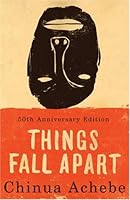 Okonkwo was well known throughout the nine villages and even beyond. His fame rested on solid personal achievements. As a young man of eighteen he had brought honor to his village by throwing Amalinze the Cat. Amalinze was the great wrestler who for seven years was unbeaten, from Umuofia to Mbaino. He was called the Cat because his back would never touch the earth. It was this man that Okonkwo threw in a fight which the old men agreed was one of the fiercest since the founder of their town engaged a spirit of the wild for seven days and seven nights. The drums beat and the flutes sang and the spectators held their breath. Amalinze was a wily craftsman, but Okonkwo was as slippery as a fish in water. Every nerve and every muscle stood out on their arms, on their backs and their thighs, and one almost heard them stretching to breaking point. In the end, Okonkwo threw the Cat. That was many years ago, twenty years or more, and during this time Okonkwo's fame had grown like a bush-fire in the harmattan. He was tall and huge, and his bushy eyebrows and wide nose gave him a very severe look. He breathed heavily, and it was said that, when he slept, his wives and children in their houses could hear him breathe. When he walked, his heels hardly touched the ground and he seemed to walk on springs, as if he was going to pounce on somebody. And he did pounce on people quite often. He had a slight stammer and whenever he was angry and could not get his words out quickly enough, he would use his fists. He had no patience with unsuccessful men. He had had no patience with his father. Unoka, for that was his father's name, had died ten years ago. In his day he was lazy and improvident and was quite incapable of thinking about tomorrow. If any money came his way, and it seldom did, he immediately bought gourds of palm-wine, called round his neighbors and made merry. He always said that whenever he saw a dead man's mouth he saw the folly of not eating what one had in one's lifetime. Unoka was, of course, a debtor, and he owed every neighbor some money, from a few cowries to quite substantial amounts. He was tall but very thin and had a slight stoop. He wore a haggard and mournful look except when he was drinking or playing on his flute. He was very good on his flute, and his happiest moments were the two or three moons after the harvest when the village musicians brought down their instruments, hung above the fireplace. Unoka would play with them, his face beaming with blessedness and peace. Sometimes another village would ask Unoka's band and their dancing egwugwu to come and stay with them and teach them their tunes. They would go to such hosts for as long as three or four markets, making music and feasting. Unoka loved the good fare and the good fellowship, and he loved this season of the year, when the rains had stopped and the sun rose every morning with dazzling beauty. And it was not too hot either, because the cold and dry harmattan wind was blowing down from the north. Some years the harmattan was very severe and a dense haze hung on the atmosphere. Old men and children would then sit round log fires, warming their bodies. Unoka loved it all, and he loved the first kites that returned with the dry season, and the children who sang songs of welcome to them. He would remember his own childhood, how he had often wandered around looking for a kite sailing leisurely against the blue sky. As soon as he found one he would sing with his whole being, welcoming it back from its long, long journey, and asking it if it had brought home any lengths of cloth. That was years ago, when he was young. Unoka, the grown-up, was a failure. He was poor and his wife and children had barely enough to eat. People laughed at him because he was a loafer, and they swore never to lend him any more money because he never paid back. But Unoka was such a man that he always succeeded in borrowing more, and piling up his debts. One day a neighbor called Okoye came in to see him. He was reclining on a mud bed in his hut playing on the flute. He immediately rose and shook hands with Okoye, who then unrolled the goatskin which he carried under his arm, and sat down. Unoka went into an inner room and soon returned with a small wooden disc containing a kola nut, some alligator pepper and a lump of white chalk. "I have kola," he announced when he sat down, and passed the disc over to his guest. "Thank you. He who brings kola brings life. But I think you ought to break it," replied Okoye, passing back the disc. "No, it is for you, I think," and they argued like this for a few moments before Unoka accepted the honor of breaking the kola. Okoye, meanwhile, took the lump of chalk, drew some lines on the floor, and then painted his big toe. As he broke the kola, Unoka prayed to their ancestors for life and health, and for protection against their enemies. When they had eaten they talked about many things: about the heavy rains which were drowning the yams, about the next ancestral feast and about the impending war with the village of Mbaino. Unoka was never happy when it came to wars. He was in fact a coward and could not bear the sight of blood. And so he changed the subject and talked about music, and his face beamed. He could hear in his mind's ear the blood-stirring and intricate rhythms of the ekwe and the udu and the ogene, and he could hear his own flute weaving in and out of them, decorating them with a colorful and plaintive tune. The total effect was gay and brisk, but if one picked out the flute as it went up and down and then broke up into short snatches, one saw that there was sorrow and grief there. Okoye was also a musician. He played on the ogene. But he was not a failure like Unoka. He had a large barn full of yams and he had three wives. And now he was going to take the Idemili title, the third highest in the land. It was a very expensive ceremony and he was gathering all his resources together. That was in fact the reason why he had come to see Unoka. He cleared his throat and began: "Thank you for the kola. You may have heard of the title I intend to take shortly." Having spoken plainly so far, Okoye said the next half a dozen sentences in proverbs. Among the Ibo the art of conversation is regarded very highly, and proverbs are the palm-oil with which words are eaten. Okoye was a great talker and he spoke for a long time, skirting round the subject and then hitting it finally. In short, he was asking Unoka to return the two hundred cowries he had borrowed from him more than two years before. As soon as Unoka understood what his friend was driving at, he burst out laughing. He laughed loud and long and his voice rang out clear as the ogene, and tears stood in his eyes. His visitor was amazed, and sat speechless. At the end, Unoka was able to give an answer between fresh outbursts of mirth. "Look at that wall," he said, pointing at the far wall of his hut, which was rubbed with red earth so that it shone. "Look at those lines of chalk;" and Okoye saw groups of short perpendicular lines drawn in chalk. There were five groups, and the smallest group had ten lines. Unoka had a sense of the dramatic and so he allowed a pause, in which he took a pinch of snuff and sneezed noisily, and then he continued: "Each group there represents a debt to someone, and each stroke is one hundred cowries. You see, I owe that man a thousand cowries. But he has not come to wake me up in the morning for it. I shall pay, you, but not today. Our elders say that the sun will shine on those who stand before it shines on those who kneel under them. I shall pay my big debts first." And he took another pinch of snuff, as if that was paying the big debts first. Okoye rolled his goatskin and departed. When Unoka died he had taken no title at all and he was heavily in debt. Any wonder then that his son Okonkwo was ashamed of him? Fortunately, among these people a man was judged according to his worth and not according to the worth of his father. Okonkwo was clearly cut out for great things. He was still young but he had won fame as the greatest wrestler in the nine villages. He was a wealthy farmer and had two barns full of yams, and had just married his third wife. To crown it all he had taken two titles and had shown incredible prowess in two inter-tribal wars. And so although Okonkwo was still young, he was already one of the greatest men of his time. Age was respected among his people, but achievement was revered. As the elders said, if a child washed his hands he could eat with kings. Okonkwo had clearly washed his hands and so he ate with kings and elders. And that was how he came to look after the doomed lad who was sacrificed to the village of Umuofia by their neighbors to avoid war and bloodshed. The ill-fated lad was called Ikemefuna. Chapter Two Okonkwo had just blown out the palm-oil lamp and stretched himself on his bamboo bed when he heard the ogene of the town crier piercing the still night air. Gome, gome, gome, gome, boomed the hollow metal. Then the crier gave his message, and at the end of it beat his instrument again. And this was the message. Every man of Umuofia was asked to gather at the market place tomorrow morning. Okonkwo wondered what was amiss, for he knew certainly that something was amiss. He had discerned a clear overtone of tragedy in the crier's voice, and even now he could still hear it as it grew dimmer and dimmer in the distance. The night was very quiet. It was always quiet except on moonlight nights. Darkness held a vague terror for these people, even the bravest among them. Children were warned not to whistle at night for fear of evil spirits. Dangerous animals became even more sinister and uncanny in the dark. A snake was never called by its name at night, because it would hear. It was called a string. And so on this particular night as the crier's voice was gradually swallowed up in the distance, silence returned to the world, a vibrant silence made more intense by the universal trill of a million million forest insects. On a moonlight night it would be different. The happy voices of children playing in open fields would then be heard. And perhaps those not so young would be playing in pairs in less open places, and old men and women would remember their youth. As the Ibo say: "When the moon is shining the cripple becomes hungry for a walk." But this particular night was dark and silent. And in all the nine villages of Umuofia a town crier with his ogene asked every man to be present tomorrow morning. Okonkwo on his bamboo bed tried to figure out the nature of the emergency--war with a neighboring clan? That seemed the most likely reason, and he was not afraid of war. He was a man of action, a man of war. Unlike his father he could stand the look of blood. In Umuofia's latest war he was the first to bring home a human head. That was his fifth head; and he was not an old man yet. On great occasions such as the funeral of a village celebrity he drank his palm-wine from his first human head. In the morning the market place was full. There must have been about ten thousand men there, all talking in low voices. At last Ogbuefi Ezeugo stood up in the midst of them and bellowed four times, "Umuofia kwenu", and on each occasion he faced a different direction and seemed to push the air with a clenched fist. And ten thousand men answered "Yaal" each time. Then there was perfect silence. Ogbuefi Ezeugo was a powerful orator and was always chosen to speak on such occasions. He moved his hand over his white head and stroked his white beard. He then adjusted his cloth, which was passed under his right arm-pit and tied above his left shoulder. "Umuofia kwenu", he bellowed a fifth time, and the crowd yelled in answer. And then suddenly like one possessed he shot out his left hand and pointed in the direction of Mbaino, and said through gleaming white teeth firmly clenched: "Those sons of wild animals have dared to murder a daughter of Umuofia." He threw his head down and gnashed his teeth, and allowed a murmur of suppressed anger to sweep the crowd. When he began again, the anger on his face was gone and in its place a sort of smile hovered, more terrible and more sinister than the anger. And in a clear unemotional voice he told Umuofia how their daughter had gone to market at Mbaino and had been killed. That woman, said Ezeugo, was the wife of Ogbuefi Udo, and he pointed to a man who sat near him with a bowed head. The crowd then shouted with anger and thirst for blood. Many others spoke, and at the end it was decided to follow the normal course of action. An ultimatum was immediately dispatched to Mbaino asking them to choose between war on the one hand, and on the other the offer of a young man and a virgin as compensation. Umuofia was feared by all its neighbors. It was powerful in war and in magic, and its priests and medicine men were feared in all the surrounding country. Its most potent war-medicine was as old as the clan itself. Nobody knew how old. But on one point there was general agreement--the active principle in that medicine had been an old woman with one leg. In fact, the medicine itself was called agadi-nwayi, or old woman. It had its shrine in the centre of Umuofia, in a cleared spot. And if anybody was so foolhardy as to pass by the shrine after dusk he was sure to see the old woman hopping about. (Continues...) | | | | | | | | | | | | | |  | | | | BookDaily Top Five | - Heaven is for Real: A Little Boy's Astounding Story of ...
- Eat to Live: The Amazing Nutrient-Rich Program for Fast ...
- A Dance with Dragons: A Song of Ice and Fire: Book Five
- In the Garden of Beasts: Love, Terror, and an American ...
- The Great Gatsby
| | | | Excerpted from "Things Fall Apart" by Chinua Achebe. Copyright (C) 1994 by Chinua Achebe. Excerpted by permission. All rights reserved. No part of this excerpt may be reproduced or reprinted without permission in writing from the publisher. Excerpts are provided by Dial-A-Book Inc. solely for the personal use of visitors to this web site. | | | | | Manage Your Subscriptions You are currently subscribed as dwyld.kwu.careers@blogger.com.
To unsubscribe from this newsletter, please notify us here. BookDaily, ArcaMax Publishing, Inc., 729 Thimble Shoals Blvd., Suite 1-B, Newport News, VA 23606 | FAX (757) 596-9731
Copyright © 2010 ArcaMax Publishing, Inc. All Rights Reserved. Contact Us | FAQ/Help | Privacy Notice | | | |  |
Recipe4Living - Special Offer  | PAID ADVERTISEMENT
| | Buck, a 44 year old obese father of 4, finally lost his belly
by being a guinea pig for his own product.
What's unusual is that he runs a supplement company
and in this video he spills the beans about how the
"diet industry" keeps customers fat for big profits.
And more importantly, he shares the winning combination he
used to get his life back.
Go here to see the surprising video: "How Buck Lost His Belly And Got His Life Back"

If you would like to be removed from our email list, please click here.
Ultimate Lifespan LLC
2710 Thomes Ave. Suite 864
Cheyenne, WY 82001 | | *mf rfls 090311 dwyld.kwu.careers@blogger.com mf* | | This e-mail was requested by: dwyld.kwu.careers@blogger.com.
To unsubscribe, click here.
To manage your subscriptions, click here.
The preceding is a paid message from a Recipe4Living advertiser and does not reflect the views of Recipe4Living. Any questions or concerns regarding this offer should be directed to the advertiser. Privacy Policy: http://www.recipe4living.com/privacy Ampere Media LLC, 3400 Dundee Road, Suite 236, Northbrook, IL 60062, FAX: (847) 205-9340
Copyright © 2011 Ampere Media, LLC. All rights reserved. | | | | 




 The Daily Reckoning U.S. Edition


